World

------------ IMPLEMENTATION AROUND THE WORLD ------------
The ManKind Project comprises 12 autonomous regions across the world: Australia, Belgium, Canada, France, Germany, Mexico, New Zealand, the Nordic countries (Norway, Denmark, Sweden, Finland), South Africa, Switzerland, the United Kingdom and Ireland, and the United States. It also includes several developing regions: Costa Rica, Israel, Italy, the Netherlands, China, Croatia, Romania, Singapore, Spain, South America (Argentina, Peru) and Central Africa (Cameroon, Democratic Republic of the Congo).
The ManKind Project is active in over 28 countries. Several regions have more than one local training community. Each community organises the ‘New Warrior Initiation Adventure’ weekend as well as further training in leadership and community development. It also supports a network of men’s support groups, which we call ‘I-Groups’ (Integration Groups).
AUTONOMOUS REGIONS










DEVELOPING REGIONS





A BRIEF HISTORY OF THE NEW WARRIOR TRAINING ADVENTURE
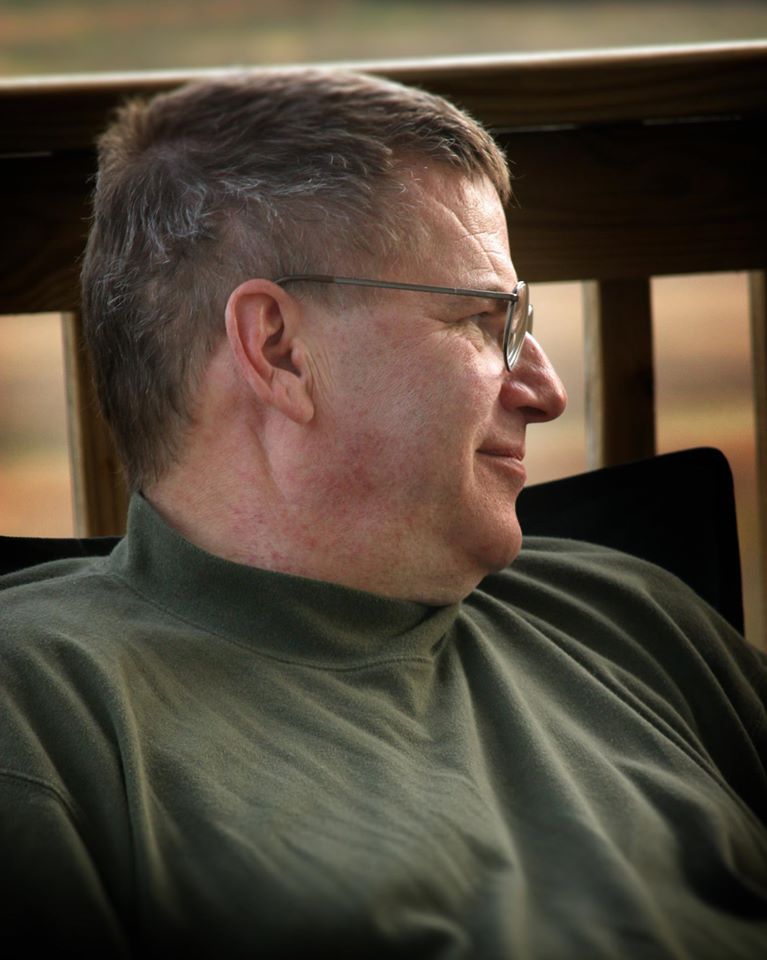
Hal Klegman
[Executive Coach, Co-Leader and Board Member of the ManKind Project International]
« This is an introduction to the history of the New Warrior Initiation Adventure, an initiatory retreat for men, first held in Wisconsin in January 1985. This study explores how three men from different cultural backgrounds developed a training programme which, since its inception, has attracted more than 70,000 men in the USA, Canada, France, Belgium, the United Kingdom, Germany, Australia, New Zealand, Spain, South Africa, Mexico, Spain, Israel, and elsewhere.»
The founders
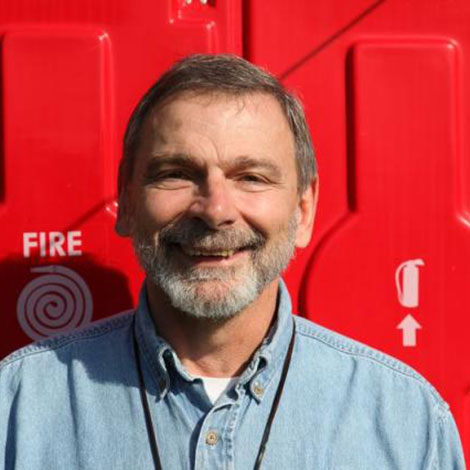
The New Warrior’s Initiatory Adventure was conceived by three men: Rich Tosi, Bill Kauth and Ron Hering. When they founded the New Warrior’s Initiatory Adventure in 1985, Richard Tosi was an engineer at General Motors in Milwaukee. He had been a captain in the US Navy and an electronic warfare officer in Naval Aviation, and had seen combat in Vietnam. Bill Kauth had a university degree in psychology and was a feminist therapist in his own right. Ron Hering had a PhD in education, was a university lecturer and a seminar facilitator. Tosi, the sailor, had very little in common with Kauth or Hering.
Rich Tosi
[Co-founder of ManKind Project]
« Hal Klegman has done a magnificent job of unravelling and clarifying the early history of the New Warriors’ Initiatory Journey. It is as though those of us who were involved at the time had different and often contradictory versions of what actually happened. Hal’s incredible ability to listen to each of us, with both his mind and his heart, is a true gift. He then patiently and skilfully wove the threads together to form an accurate historical picture. I love reading Hal’s account because it reflects my own personal experience and, at the same time, gives me a broader picture of what others were going through at the same time. Thank you, Hal.»
Bill Kauth
[Co-founder of ManKind Project]
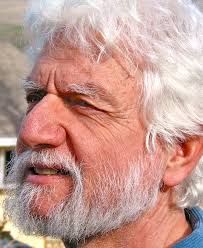
« The woman I was dating was the chair of the Wisconsin Association of Feminist Therapists. I described myself as a feminist therapist because, quite frankly, in the 1970s, that was the spirit of the times. It was the spirit of personal growth. I could see that these people were very enlightened individuals and I wanted to be part of that. And so I really did call myself a feminist therapist, which basically meant that I was authentic with my clients and didn’t put up any artificial barriers. So she invited me to this biannual meeting of all the feminist therapists in Wisconsin. As far as I can remember, I was the only feminist therapist there who had a penis! (I haven’t checked.)
Ron Hering
[Co-founder of ManKind Project]
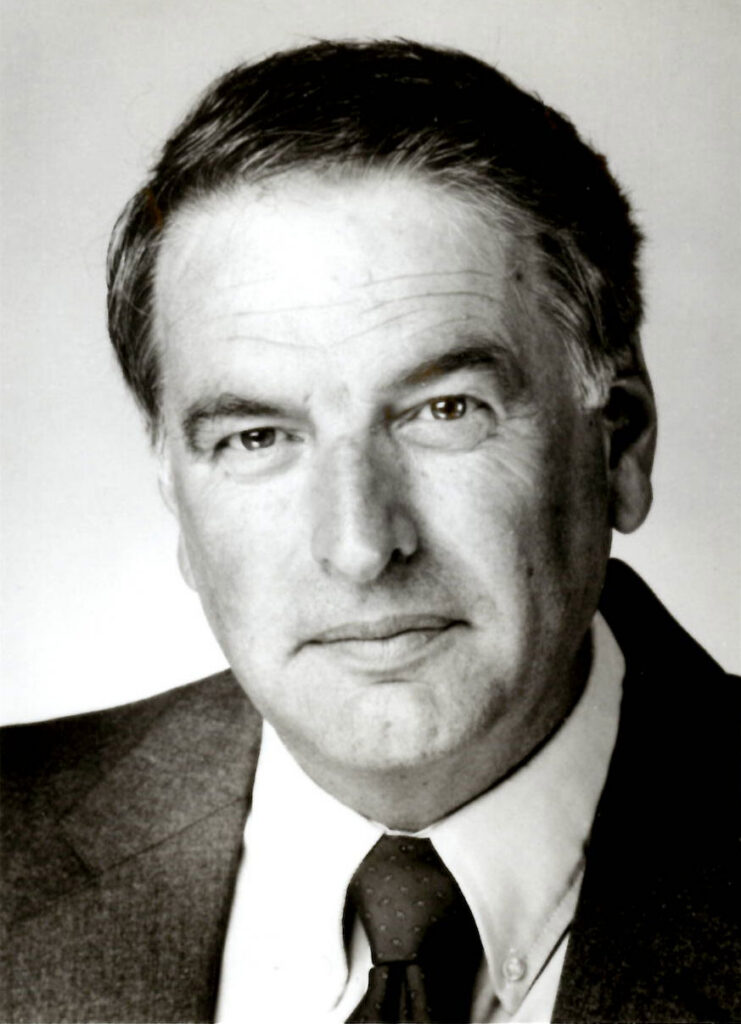
Ron Hering was a passionate advocate for men who confront their emotions and choose to move away from the image of the “old warrior”. He was killed by his father-in-law in a murder-suicide following a dispute over child custody in May 1993.
“Vulnerability is the cradle of love, belonging, joy, courage, empathy and creativity. It is the source of hope, empathy, responsibility and authenticity. If we want more clarity in our lives or a deeper, more meaningful spiritual life, vulnerability is the way” [Dr Brené Brown, based on the work of Ron Hering]
The context – A fertile ground for men’s work
In the 1970s and 1980s, psychologists and sociologists engaged in heated debates about gender and gender roles. Books such as Dr Herb Goldberg’s *The Risks of Being a Male: Surviving the Myth of Male Privilege* (1976) and Dr Ken Druck’s *The Secrets Men Keep* were among the first to suggest that, even as the feminist revolution was in full swing, men’s emotional and spiritual lives were in turmoil and deserved attention.
In her 1983 book *Intimate Strangers*, Dr Lillian Rubin addressed the changing roles of men and women. She wrote: “The quest for personal change without efforts to change the institutions in which we live and grow will be achieved only to a limited extent.” Thus, the need for societal change to complement personal development was certainly a subject of reflection for therapists such as Bill Kauth and university professors such as Ron Hering.
Researchers such as Herb Goldberg were at the forefront of the academic response to the women’s movement. Meanwhile, Justin Sterling had developed the ‘Men, Sex and Power’ weekend. What were men seeking? What did society expect of men?
The New Warrior’s Initiatory Journey emerged at the intersection of men’s need for personal and social change.
Initiation in America
n the nineteenth century, American initiating men’s groups were so prevalent that it has been estimated that as many as 70,000 fraternal lodges existed; “A total adult male population of nineteen million in 1896 provided five and one half million members for fraternal groups.”
The New Warrior experience is an updated version of an American tradition, a male secret society. Mark Carnes’s 1989 book, Secret Ritual and Manhood in Victorian America, spoke of these early American initiation societies as being primarily about initiation and very little else. Elaborate ceremonies, costumes and progressively higher levels of initiation took up so much time that there was little time left for socializing.
The first New Warrior Training Adventure did not envision anything beyond the weekend experience itself, nor was it about elaborate ritual and costume. It was about separation from the mundane, much as these earlier American experiences were a separation from the ordinary aspects of life.
The New Warrior Training as Initiation
One of the principles of the New Warrior’s Initiatory Adventure was that it should be a weekend-long gathering of men—introductory, experiential and initiatory—with a focus on in-depth self-analysis. This initiatory training was modelled—unconsciously at first, and later deliberately—largely on Joseph Campbell’s cross-cultural research. It utilises his stages of initiation, which are: separation, descent, trial, and return to the community of initiated men.
This part of the initiation, referred to by Campbell as ‘the Hero’s Journey’, was an integral part of the New Warrior training, with the New Warrior Adventure drawing upon it.
The Hero’s Journey, in this context, was an inner quest to fight one’s inner dragons. The principle was that a man could not fight the dragons of the world until he had fought and vanquished his own. In the New Warrior’s Initiatory Adventure, these demons were represented by ‘shadows’. In Jungian psychology, the ‘shadow’ is that part of the person which is hidden, repressed and denied. The myths of Gilgamesh, the Odyssey and Perceval are often seen as symbolic of every man’s journey.
The New Warrior’s Initiatory Adventure took place within a safe framework, in a ritual space.
The setting, or ‘container’, is a metaphor for the alchemist’s crucible: a vessel capable of holding the energetic process of transformation. These processes needed to be emotionally safe and psychologically evocative of a ritual space. This space is a place, removed from the mundane or ordinary reality, to which the setting has conferred a symbolic or sacred purpose.
In men’s healing work, this is an area often situated in a natural outdoor setting where men can find themselves free from the influences of civilisation within a setting that is safe and blessed, often through ritual. The work of initiating and healing other men demands energy in physical, emotional and spiritual terms, which requires a significant framework.
The initiation of men, as envisaged here, is a process for transmitting and shaping a healthy understanding of what it means to be a man. This involves rites, activities and ceremonies designed to create a meaningful sense of belonging and masculine identity.
Initiation, as used to describe the New Warrior Initiation Adventure, refers to the personal and psychological impact of the programme on the individual.
“The New Warrior Training bore similarities to UYO (Understanding Yourself and Others), as that programme was one of the main sources of inspiration for the men’s programme created by Bill Kauth and the other two founders. Gestalt was completely new thirty years ago. We brought in some of the best Gestalt trainers from all over the United States… The process we used was very similar to what we call emotional catharsis work carried out in certain psychotherapeutic models.”
Robert Moore
[Journalist]
« It may be that in the twenty-fifth century an elder will tell a story like this to a group of children: In the final years of the twentieth century, a small group of men of various races and backgrounds woke up, looked around them, and saw what the times were made of. They saw how desperate the situation was, and how slim the chances were that they could do the job that needed doing. But despite this, they answered ‘yes’ to the challenge. Children, even though we cannot remember their names, we are eternally grateful to them. »
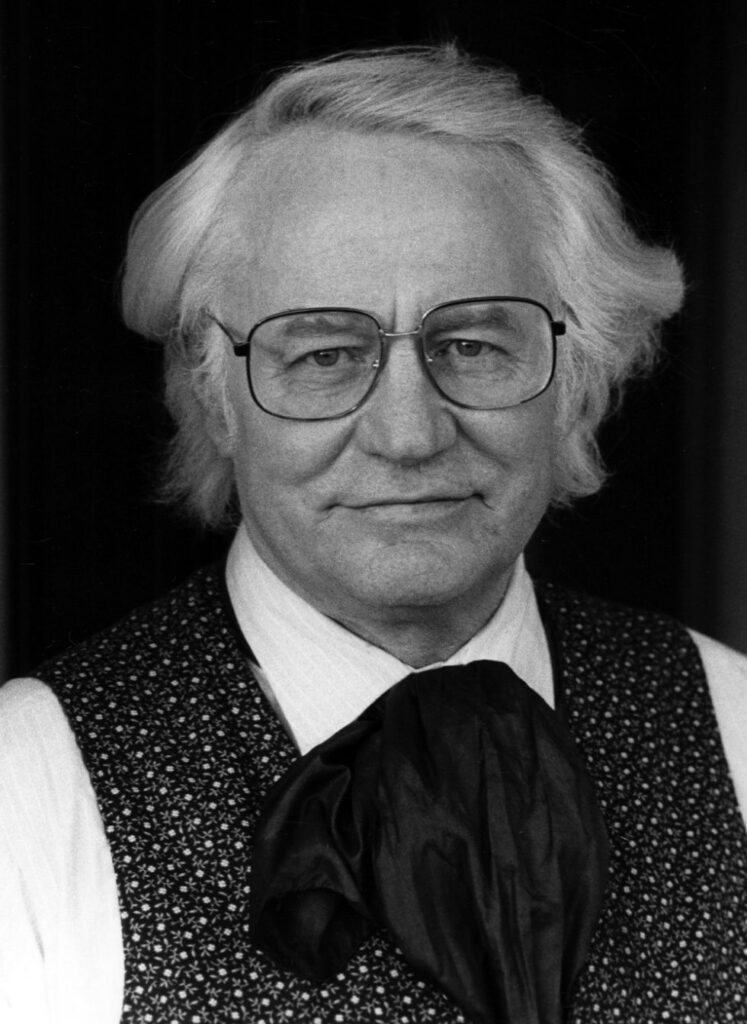
Robert Bly
[Writer]
« Around the age of 35, a man realises that the images of the upright man, the tough man, and the real man that he was taught at school don’t work in real life »
« When a father, who is away all day, comes home at six in the evening, his children benefit from his good humour but not from his guidance »
Description of the initiation
Joseph Campbell reflected on initiation and offered several examples drawn from primitive societies. He speaks of the initiator as the ‘wise old man of myths and tales whose words support the Hero [to be initiated]…’. Further on, Campbell states that: ‘ the true effect of these [rites] was to lead people through those difficult thresholds of transformation that require a change not only in conscious but also in unconscious patterns of life”.
In discussing the role of initiation and its central place in the human experience, Robert Moore suggested that the word ‘initiation’ as used by Jungians could be translated as ‘transformation’.
Moore writes: “Initiation is the process of dying and being reborn. This archetype is so powerful in human life that it appears in all areas of experience. Once you have the eye to recognise this archetype, a whole host of questions you have been asking yourself begin to fall into place.”
The Forgotten Initiation
Michael Greenwald, one of the founders of the New Warrior Network, the predecessor to Mankind Project International, has written that initiation essentially serves to restore mature masculinity to the world.
‘The modern world must reclaim mature masculinity. Its virtual absence from technologically advanced societies has, according to the author, led to one of the most serious moral crises Western civilisation has ever faced. The world’s population has the means to create a virtual utopia. Yet we lack the collective will, if only to prevent the annihilation of entire cultures, giving way to famine and disease. In our world, genocides go almost unnoticed. Rape is used as an instrument of pathological male expression and ethnic warfare. We are prepared to enhance our performance through chemical means (antidepressants or steroids, for example) at the expense of accepting our human limitations. We tolerate the pollution of the planet and scandalously high infant mortality rates. Violence is becoming the preferred solution to interpersonal conflicts. In all this, we see evidence that mature masculinity, in its fullness, has been all but forgotten, and that ‘Boy Psychology’ is dominant.”
The rediscovered initiation
Hering, Tosi and Kauth can be regarded as the—albeit unwitting—rediscoverers of initiation.
The New Warrior’s Initiatory Journey has fulfilled a societal need and a historic mission. In the introduction to the book *The Secrets Men Keep*, Dr Ken Duck wrote: ‘Men today are the guardians of the best-kept secrets. We live secret emotional lives, often hiding our deepest fears and insecurities, as well as our most cherished dreams, even from those we love and trust.’
One of these secrets concerns the profound cultural and emotional meaning and significance of initiation. The historical mission dates back to Henderson’s assertion about initiation, quoted above, that it ‘must be rediscovered’. Many discoverers are not immediately aware of what they have found. Columbus did not know he had discovered America. In the same way, Tosi, Kauth and Hering did not know they had reinvented initiation. Their aim was to offer men a tool to do ‘something’.
Michael Meade writes: ‘It is no coincidence that the average age of participants at these gatherings (men’s weekends) is around forty – it is no coincidence, because the “midlife crisis” represents another period of initiation.’

Douglas Gillette
[Writer]
“Redefining age-old concepts of masculinity, Jungian analysts Robert Moore and Douglas Gillette argue that mature masculinity is not abusive or domineering, but generative, creative and empowering—both for oneself and for others. Moore and Gillette clearly define the four mature masculine archetypes that feature in myth and literature throughout history: the king (the energy of just and creative order), the warrior (the energy of determined but non-violent action), the magician (the energy of initiation and transformation), and the lover (the energy that connects people to one another and to the world), as well as the four immature patterns that interfere with masculine potential (the divine child, the Oedipal child, the trickster and the hero).“
The influence of the original Americans
Finally, there were also a number of elements incorporated into the New Warrior’s Initiatory Journey that stem directly from Native American culture. There were a number of Native American-inspired fraternal organisations in the nineteenth century, such as ‘the Order of the Red Men’, and there were youth organisations such as ‘the Campfire Girls’ which employed Native American traditions and dress or invented their own style and labelled it ‘Indian’.
In their search for ways to break down the barriers between mundane existence and the experience of the New Warrior’s Initiatory Adventure, the founders did what others before them had done: without any prior conscious awareness of the consequences of their actions on traditional peoples, they appropriated Native American-style rituals; something that other groups forming in the early and mid-1980s had done with similar aims.
Deloria goes on to write: ‘The New Age men’s movement, for example, has developed a sophisticated blend of interpersonal psychology, group therapy and intuitive training within formats tinged with Native American influences. Gathering outdoors, the movement’s male devotees made and wore masks, passed a ‘talking stick’ around as they recounted repressed stories, and meditated alone in nature on a sort of well-seasoned vision quest. … Women’s groups had similar connection rituals, often organised around an essentialist vision of women’s fundamental bond with the earth. And, of course, New Age adherents of both sexes bonded over each other’s cultural knowledge in mixed-gender settings.”
An initiation was organised for the second time in April 1985, entitled ‘The New Warrior Initiation Adventure’. In 1987, a group of men from Chicago sponsored this initiation, and thus the seeds of the ‘New Warrior Network’ were sown. In February 1988, the New Warrior Network became ‘the Mankind Project’.
What began with seventeen men in Wisconsin is now an international organisation present in over 28 countries. In 2020, 70,000 men completed the New Warrior Initiation Adventure.
Further reading
Christian Krumb, « Homme-training ». © Psychologies Magazine, hors-série, juin 2010 (pour l’article français)
Joseph Campbell, “Le héros aux mille et un visages” (The Hero with a thousand faces) 1949.
Stephen Gilligan et Robert Dilts, “Le voyage du héros – Un éveil à soi-même” (The Hero’s Journey: a Voyage of Self-Discovery) 2009.
Robert Bly “L’homme sauvage et l’enfant. L’avenir du genre masculin” (Iron John: A Book About Men) 1990.
INREE – Des Hommes authentiques – Magazine “Air du temps”
INEXPLORE – Des rituels pour se relier à la vie
Carl Gustav Jung – Charles Kerényi, “Introduction à l’essence de la mythologie” 1941.